What is the casting process in manufacturing? It is the controlled transformation of molten material into useful parts through mould design, filling, solidification, and finishing. The method looks simple. The physics is not.
The World Foundry Organization’s 2023 Global Foundry Census reported worldwide casting production above 100 million tonnes. That scale shows casting remains central to automotive, energy, construction, and industrial equipment manufacturing. Grand View Research also projects continued growth in the global metal casting market through 2030, driven by lightweight alloys, infrastructure demand, and automated production.
Yet volume alone does not prove quality. A turbine housing may appear sound outside while hidden shrinkage weakens its internal walls. Engineers therefore examine gating, risers, pouring temperature, cooling rates, dimensional tolerance, and inspection results together. X-ray testing, computed tomography, and process simulation can reveal defects before delivery, but they cannot repair poor process planning.
Casting researcher John Campbell states, “The quality of a casting is determined by the quality of the liquid metal entering the mould.” His principle remains practical in 2026. Clean metal matters.
This guide explains how modern casting works, from pattern creation to final machining. It compares sand casting, investment casting, die casting, and permanent mould casting. It also considers energy use, recycled metal, automation, and production cost.
No process is perfect. Material data can vary. Simulations can mislead. Skilled review still matters. The best manufacturing decision balances geometry, alloy behavior, production volume, inspection requirements, and real operating conditions.
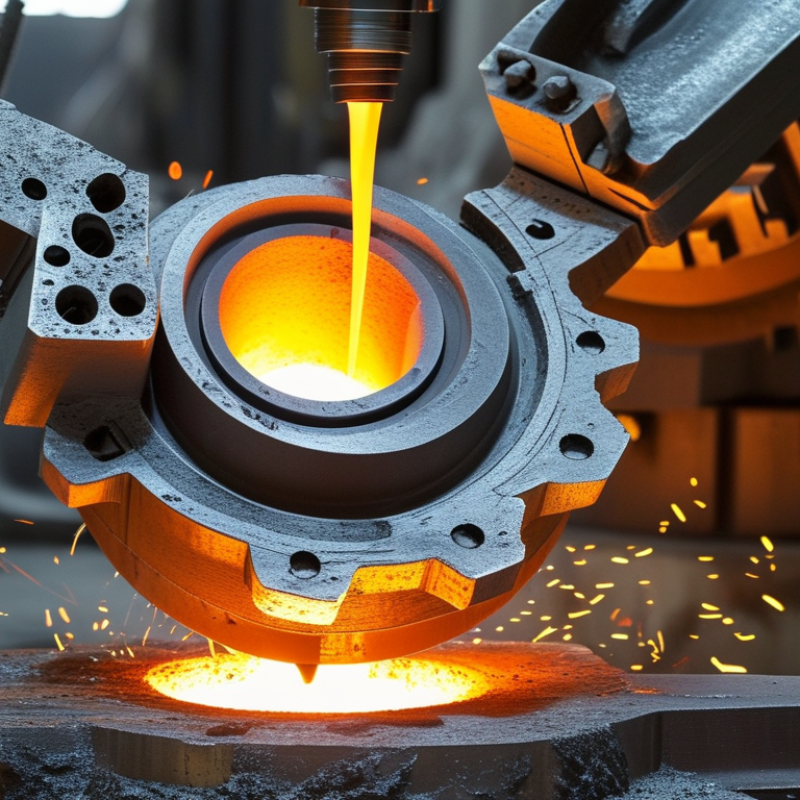
Choosing the best casting process in 2026 starts with understanding its fundamentals. Casting transforms molten metal into a controlled shape through patterns, molds, solidification, and finishing. Each stage affects strength, surface quality, dimensional accuracy, and production cost. Small temperature errors can create shrinkage, cracks, or hidden porosity. Process choice depends on alloy, part size, wall thickness, quantity, and required tolerance. Sand casting suits larger parts and flexible designs, while die casting supports high-volume production with consistent details. Investment casting helps create complex shapes, but preparation can be slower and more demanding.
Modern manufacturing connects casting with simulation, sensors, automated inspection, and data-based process control. These tools can predict metal flow and identify weak areas before production begins. However, simulation is not physical evidence. A test piece may reveal problems that software misses. Shop-floor reviews often expose practical issues, such as uneven mold moisture or difficult part removal. The first design is rarely perfect. That is not failure; it is useful feedback for improving the process and the product.
Tips: Confirm alloy behavior before selecting equipment. Check mold temperature, pouring speed, and cooling conditions during trials. Use dimensional gauges and internal inspections, not visual checks alone. Record defects with photographs and measurements. Small records become valuable process knowledge.
Selecting the best casting method starts with the product, not the equipment. Review its shape, alloy, wall thickness, size, and expected production volume. Sand casting suits large parts and lower volumes, especially when design changes remain possible. Die casting fits high-volume components with thin walls and consistent dimensions. Investment casting helps produce detailed shapes with smoother surfaces and fewer machining steps. These choices involve trade-offs. No process wins every time.
Ask how accurately the part must fit. Tight tolerances may reduce later machining, but they can increase tooling costs and inspection demands. Check the alloy’s pouring temperature, shrinkage behavior, and cooling response. A practical trial often reveals problems that drawings hide, such as trapped air near a narrow rib. Production experience matters here. I have seen a low-cost process become expensive after repeated repairs and rejected batches. That judgment may still be wrong without reliable test data.
Tips: Compare tooling, material, labor, machining, and inspection costs together. Request sample castings before approving full production. Test the most difficult feature, not just an easy sample. Keep a small allowance for design changes. This is often overlooked. Recheck the decision when order volume, tolerances, or material requirements change.
2026 Best Casting Process in Manufacturing Guide?
A reliable casting workflow starts with a pattern designed for the final part, not just its drawing. Engineers review wall thickness, draft angles, shrinkage, and machining allowances before creating the pattern. I prefer checking thin corners with a simple section analysis. They often reveal cooling problems early. Pattern material depends on production volume, surface detail, and dimensional demands. The design team should record every revision and its reason. This discipline prevents costly confusion later.
After pattern approval, technicians form the mold and place cores where internal cavities are needed. The gating and risering system must guide metal smoothly and feed areas that shrink during solidification. A digital flow study can help, but it cannot replace practical judgment. Mold moisture, sand density, and vent placement deserve close inspection. Small defects here may become serious inclusions or porosity. The mold is then closed, clamped, and prepared for pouring.
The foundry melts the selected alloy, checks its temperature, and removes unwanted impurities. Operators pour at a controlled rate while recording batch details and process readings. Once cooled, the part is removed, trimmed, and cleaned by suitable mechanical methods. Heat treatment may improve strength or relieve internal stress. Inspectors then check dimensions, surface condition, hardness, and hidden defects when required. A rough first trial is not a failure. It is evidence. Engineers should compare results with the original assumptions and adjust the pattern, feeding system, or cooling plan before the next pour.
The best casting process depends on quality targets, budget, material, and production scale. No method wins every time. Sand casting remains practical for large parts, complex shapes, and low-to-medium volumes. Tooling costs are relatively low, but surfaces often need machining. Investment casting delivers finer detail and tighter dimensions. However, its patterns and ceramic shells increase preparation time and cost.
For high-volume aluminum or zinc components, die casting offers strong repeatability, thin walls, and smooth surfaces. It requires expensive dies, so small batches can become uneconomical. Permanent-mold casting sits between sand and die casting. It can improve finish and consistency while keeping tooling less demanding than pressure die casting. Centrifugal casting suits rings, sleeves, and pipes because rotation helps control density and wall formation.
Material choice changes the decision. Steel and iron commonly favor sand or investment routes, while aluminum alloys often suit permanent molds or die casting. A 2023 global casting census reported worldwide production above 100 million metric tonnes in 2022, showing why scale strongly influences process economics. Industry energy studies also identify melting as a major energy demand, so yield and scrap rates deserve early attention. A cheaper mold may waste more metal later. That is easy to miss. Actual tolerance data, defect history, and batch size should guide the final selection, not a first quotation alone.
2026 Best Casting Process in Manufacturing Guide?
Industrial casting is moving from furnace-centered work toward data-centered control. The World Foundry Organization’s Global Foundry Census reports annual worldwide output above 100 million tonnes. That scale makes small efficiency gains commercially important. In modern plants, sensors track melt temperature, pressure, humidity, and filling time. Machine-learning models then flag porosity risks before machining begins. The result is less scrap, but not zero scrap.
The U.S. Department of Energy’s Industrial Decarbonization Roadmap identifies efficiency, electrification, and material optimization as major industrial levers. These priorities are reshaping casting development. Electric melting, heat recovery, and recycled alloys can reduce energy demand when chemistry remains stable. Additive sand printing also shortens pattern development and enables internal channels once considered impractical. The International Energy Agency’s Energy Technology Perspectives 2024 connects industrial decarbonization with electrification, efficiency, and material innovation.
Yet innovation is not automatically reliable. A digital twin can predict filling behavior, while a misplaced sensor corrupts the lesson. Foundries still need calibrated instruments, traceable batches, skilled operators, and destructive testing. The World Foundry Organization’s production data shows the industry’s enormous scale, but it does not measure every maintenance burden. My practical concern is overconfidence: a pilot may look efficient until training costs appear. That tension deserves more testing before any factory calls its process future-ready.
| Casting Process | Typical Materials | Typical Part Size | Typical Dimensional Tolerance* | Typical Surface Roughness (Ra) | Production Volume | Tooling Cost | Key Advantages | 2026 Innovation Focus | Overall Fit for Industrial Manufacturing |
|---|---|---|---|---|---|---|---|---|---|
| Green Sand Casting | Cast iron, carbon steel, stainless steel, aluminum, copper alloys | Approximately 0.1–1,000 kg per part; very large molds are possible | Approximately ±1.5–3.0 mm for medium-sized parts | Typically 12.5–25 µm | Low to very high; suitable for prototypes and mass production | Low | Low pattern cost, broad alloy capability, flexible part size, and easy design changes | Low-emission binders, improved sand reclamation, digital mold filling simulation, automated defect detection, and higher recycled-material content | ★★★★★ |
| No-Bake Sand Casting | Cast iron, steel, stainless steel, aluminum, copper alloys | Approximately 1–10,000 kg per part, depending on equipment and mold design | Approximately ±1.0–2.5 mm for medium-sized parts | Typically 6.3–25 µm | Low to medium; effective for large or complex components | Low to medium | Good dimensional flexibility, large-part capability, and strong suitability for complex cores | Amine-reduced or amine-free binder systems, automated core production, real-time sand-property monitoring, and thermal-energy optimization | ★★★★☆ |
| Investment Casting | Steel, stainless steel, nickel alloys, cobalt alloys, titanium, aluminum alloys | Approximately 0.01–50 kg per part; larger parts are possible with specialized systems | Approximately ±0.1–0.5 mm | Typically 1.6–6.3 µm | Low to high; especially valuable for intricate components | Medium to high | Excellent detail, thin sections, near-net shape production, and reduced machining allowance | 3D-printed sacrificial patterns, ceramic shell automation, improved shell permeability, process simulation, and lower-waste superalloy production | ★★★★★ |
| Permanent Mold Casting | Aluminum, magnesium, zinc, copper alloys, selected ferrous alloys | Approximately 0.5–100 kg per part | Approximately ±0.25–0.75 mm | Typically 3.2–12.5 µm | Medium to high; best for repeated production | Medium to high | Reusable tooling, better surface finish than sand casting, and improved mechanical properties from controlled solidification | Conformal cooling channels, thermal-control sensors, low-pressure filling, recycled alloy quality control, and automated release-agent management | ★★★★☆ |
| High-Pressure Die Casting | Aluminum, zinc, magnesium alloys | Approximately 0.01–50 kg per part; large structural castings can exceed this range | Approximately ±0.05–0.20 mm | Typically 0.8–3.2 µm | High to very high | High | Very fast cycle times, thin walls, excellent repeatability, and low unit cost at high volume | Vacuum-assisted filling, giga-casting scale-up, real-time shot monitoring, improved die thermal management, and digital twin-based parameter control | ★★★★★ |
| Low-Pressure Die Casting | Aluminum and magnesium alloys; selected copper alloys | Approximately 1–100 kg per part | Approximately ±0.15–0.50 mm | Typically 1.6–6.3 µm | Medium to high | Medium to high | Gentle, controlled filling, low turbulence, good structural integrity, and high material yield | Closed-loop pressure control, hydrogen-porosity reduction, automated melt-quality inspection, and energy-efficient furnace systems | ★★★★☆ |
| Centrifugal Casting | Cast iron, steel, stainless steel, bronze, nickel alloys | Typically cylindrical parts from approximately 25 mm to over 2,000 mm in diameter | Approximately ±0.5–2.0 mm | Typically 3.2–12.5 µm | Low to high for cylindrical products | Medium | Dense, low-porosity structures; excellent for pipes, liners, rings, and rotational components | Variable-speed control, automated melt-temperature monitoring, ultrasonic inspection, and improved alloy segregation management | ★★★★☆ |
| Lost Foam Casting | Aluminum, cast iron, steel, and selected copper alloys | Approximately 0.5–500 kg per part | Approximately ±0.5–2.0 mm | Typically 6.3–25 µm | Medium; suitable for complex repeated designs | Medium | Complex internal passages, reduced parting lines, fewer cores, and simplified assembly designs | High-accuracy foam pattern machining, vapor-pressure control, improved refractory coatings, automated pattern inspection, and reduced casting-defect rates | ★★★★☆ |
| Additive Sand Mold and Core Casting | Aluminum, iron, steel, stainless steel, and copper alloys | Typically prototypes and low-volume parts from several grams to several hundred kilograms | Approximately ±0.3–1.0 mm, depending on printer, mold size, and material | Typically 6.3–25 µm before finishing | Prototype to low or medium volume | Low to medium; eliminates conventional pattern tooling | Rapid design iteration, highly complex channels, short lead times, and economical one-off tooling | Faster binder-jet systems, recycled sand optimization, topology-optimized cores, automated build inspection, and integrated simulation-to-print workflows | ★★★★☆ |
Start with the product, not the equipment. Review the alloy, size, wall thickness, shape, tolerance, and production volume. Compare tooling, labor, machining, inspection, and material costs together. The cheapest process may become expensive after repairs and rejected batches.
Sand casting suits large parts and lower production volumes. It also allows flexible design changes. A rough mold surface may require extra machining. It is useful, but not always the fastest option.
Die casting supports high-volume production and consistent dimensions. It can produce thin walls and repeated details. Tooling costs may be high. Small volume orders can make the method difficult to justify.
Investment casting creates complex shapes with detailed surfaces. It may reduce later machining. Preparation can take longer. A difficult internal channel may still require a separate design review.
Trials should examine shrinkage, cracks, porosity, trapped air, and incomplete filling. Inspect narrow ribs and thin walls carefully. Check pouring speed, mold temperature, and cooling conditions. The easy sample proves very little.
No. Simulation can predict metal flow and possible weak areas. It cannot reveal every shop-floor problem. Uneven mold moisture or difficult part removal may remain hidden. Physical samples and destructive tests still matter.
Sensors can track melt temperature, pressure, humidity, and filling time. Data models may flag porosity risks before machining. This can reduce scrap, but it cannot guarantee perfect parts. A misplaced sensor can produce confident, misleading results.
Electric melting, heat recovery, and stable recycled alloys can reduce energy demand. Material optimization also limits unnecessary machining and waste. Additive sand printing may shorten pattern development. The savings need measurement. Assumptions are not evidence.
Use dimensional gauges and internal inspections, not visual checks alone. Record defects with photographs, measurements, and batch details. Inspect the hardest feature on the part. Small records become valuable process knowledge over time.
This guide explains what is the casting process in manufacturing and why it remains essential to modern production. Casting transforms molten material into a desired shape by pouring it into a prepared mold, allowing manufacturers to create simple or highly complex components. The article covers key fundamentals, including pattern design, mold preparation, melting, pouring, cooling, removal, finishing, and inspection. It also explains how to select the most suitable casting method according to product geometry, required accuracy, material, production volume, surface quality, budget, and tooling needs.
The guide compares common casting approaches by quality, cost, scalability, and material compatibility, helping readers make practical decisions for prototypes, custom parts, and large-scale manufacturing. It also highlights 2026 innovations, such as improved simulation, automation, sustainable materials, energy-efficient furnaces, advanced inspection, and data-driven process control. Together, these developments are making casting more precise, efficient, consistent, and adaptable for future industrial applications.

ElvisCast Precision