The casting process in manufacturing plays a crucial role in producing various metal components. Understanding what is the casting process in manufacturing is essential for engineers and designers. This method involves pouring molten metal into a mold, where it solidifies into the desired shape.
The complexity of casting can be both its strength and its weakness. While it allows for intricate designs, it can also introduce challenges like defects. Knowledge of these potential imperfections is vital for ensuring quality. Each step, from mold creation to metal pouring, requires attention to detail. Information on materials and temperatures significantly impacts the final product’s integrity.
Learning about the casting process encourages a deeper appreciation for manufacturing. It reveals the balance between artistry and engineering. With advancements in technology, casting continues to evolve. However, even seasoned professionals should reflect on their practices to improve outcomes. This process remains a foundation of modern manufacturing, vital for turning ideas into reality.
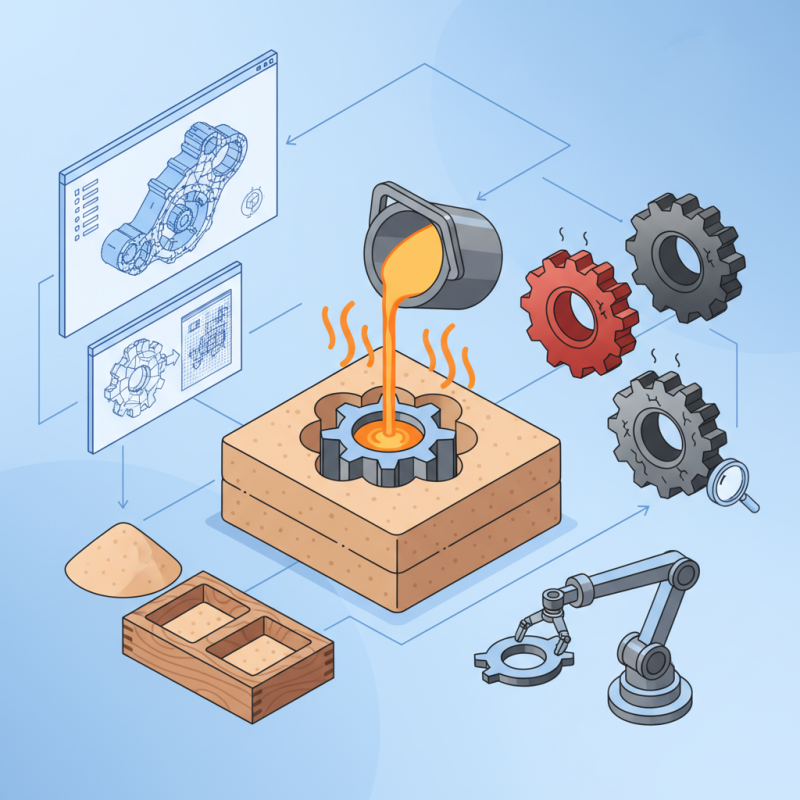
Casting is a vital manufacturing process. It allows for the creation of complex shapes and components. The global casting market was valued at approximately $150 billion in 2022. It is projected to grow due to increasing demand from various industries. This includes automotive, aerospace, and construction. Understanding the fundamentals of casting helps manufacturers improve efficiency and reduce costs.
Different casting methods exist, including sand casting, investment casting, and die casting. Each technique has its advantages and disadvantages. For instance, sand casting is cost-effective but may result in a rough surface finish. In contrast, investment casting offers high precision but is more expensive. According to industry reports, about 70% of all metal parts use sand casting processes. This data highlights its significance in various applications.
Tips: When choosing a casting method, consider production volume and complexity. Analyze the material required and expected tolerances. Also, look for opportunities to improve your existing casting processes. Addressing common challenges, like defects, can lead to better product quality. Continuous improvement is key in today's competitive market.
In the casting process, choosing the right materials is crucial. Metals and alloys form the backbone of this manufacturing method. According to industry reports, over 90% of casting processes utilize ferrous metals like iron and steel due to their strength and durability. These materials can withstand high stress, making them ideal for automotive and construction industries.
Aluminum is also a popular choice, particularly in industries seeking lightweight options. Data shows that aluminum casting has increased by 25% in recent years, driven by the demand for fuel-efficient vehicles. However, it's worth mentioning that aluminum can be tricky. It requires precise temperature control to avoid defects like porosity, which can compromise structural integrity.
Moreover, alloys such as brass and bronze are used for their unique properties. Brass, known for its corrosion resistance, is often found in plumbing components. Nevertheless, casting these alloys demands expertise. The process can be sensitive to impurities, which may lead to unexpected issues during production. Hence, manufacturers must emphasize quality control to reduce waste and ensure reliability in finished products.
Casting is a pivotal manufacturing method, widely used across industries. This process allows for the creation of complex shapes from molten materials. In 2022, the global casting market was valued at approximately $135 billion, with expectations to grow due to increased demand in sectors like automotive and aerospace.
Different casting techniques exist, each with unique benefits and challenges. Sand casting remains popular for its simplicity and cost-effectiveness, while investment casting offers precision for complex geometries. However, the latter can be more expensive and time-consuming. Recent reports indicate that 60% of manufacturers face challenges in quality control during the casting process, signifying a need for improved practices.
Another key method is die casting, valued for its ability to produce large quantities efficiently. Yet, die casting materials can limit design flexibility. Not all casting methods are suitable for every application, and choosing the wrong one can lead to increased waste and costs. Manufacturers must weigh options carefully, balancing speed, cost, and quality in their decision-making processes.
The casting process is critical in manufacturing. Precision and accuracy are paramount, especially in quality control. According to a recent industry report, poor quality in casting can lead to production losses exceeding 20%. Such losses are often tied to defects that go unnoticed during initial inspections. Implementing rigorous quality control measures helps to mitigate these risks.
Quality control in casting involves several techniques. Techniques like non-destructive testing (NDT) assess product integrity without causing damage. A study showed that NDT reduced defect rates by 30%. Additionally, process controls such as regular temperature monitoring ensure that casting materials cool uniformly. Deviations can lead to warping or internal stresses, which affect performance.
Despite advancements, challenges remain. Inconsistent raw materials can complicate quality control. Various factors, including environmental conditions, impact casting outcomes. Regular audits and feedback loops can help identify these weaknesses. Over time, manufacturers must adapt to new findings. Engaging with industry standards and ongoing training can foster improvement. Continuous assessment is essential for maintaining high-quality standards in casting.
The casting industry is evolving rapidly. Recent reports highlight a shift towards sustainable practices. The global market is projected to reach $400 billion by 2026, with a CAGR of about 5% from 2021 to 2026. This growth reflects a significant trend toward eco-friendly casting materials. Manufacturers are increasingly integrating recycled cast materials to meet rising environmental standards.
Innovation is crucial in shaping the future of casting. Advanced technologies, like 3D printing and AI, are redefining production processes. These tools enhance precision and reduce waste. A report by MarketsandMarkets indicates that the use of additive manufacturing in casting could increase efficiency by up to 30%. However, the transition is not without challenges. High initial costs and the need for skilled labor can hinder widespread adoption.
Market trends also reveal a growing demand for lightweight materials. Automotive and aerospace industries are driving this need. Lightweight cast alloys can improve fuel efficiency and performance. Yet, manufacturers must balance performance with cost. The focus on lightweight solutions must consider the financial implications of new materials and processes. The casting sector faces a dynamic landscape, with many opportunities for innovation amid continuous challenges.
: Casting is a manufacturing process that creates complex shapes and components using molten materials.
Casting allows efficient production of parts, reducing costs while meeting the demand in various industries.
Popular methods include sand casting, investment casting, and die casting, each with unique pros and cons.
Ferrous metals like iron and steel dominate casting, while aluminum is favored for lightweight applications.
Quality control reduces defects, potentially saving manufacturers from significant production losses.
Poor quality can lead to production losses exceeding 20%, mainly due to undetected defects.
Regular audits and feedback can help identify weaknesses and improve overall efficiency and quality.
Inconsistent raw materials and environmental factors can complicate quality control and affect outcomes.
Aluminum casting has increased by 25%, driven by the demand for fuel-efficient vehicles, but it requires precision.
Continuous assessment helps maintain high-quality standards and adapt to new challenges in the manufacturing process.
The article "Understanding the Casting Process in Manufacturing Explained" provides a comprehensive overview of what is the casting process in manufacturing. It begins by detailing the fundamental principles of casting, including the key materials such as various metals and alloys that are commonly used. A step-by-step guide covers different casting techniques employed in industry, emphasizing the importance of selecting appropriate methods based on specific requirements.
Moreover, the article highlights quality control measures essential for ensuring precision and accuracy throughout the casting process. Finally, it discusses current market trends and innovations that are shaping the future of casting in manufacturing, showcasing how advancements are continuously improving efficiency and product quality in this critical sector.

ElvisCast Precision