Finding the right markets for precision metal components starts with real applications, not a broad industry list. A small stainless-steel bracket inside a diagnostic device has different demands from a machined valve body used in food processing. Both may require tight tolerances, repeatable production, and reliable material records. The details matter.
Elena Brooks, a composite precision-manufacturing adviser, captures a useful sourcing principle: “Look for products where a small metal part carries a large share of the performance risk.” This is an illustrative composite quote, not a verified statement from a specific real-world expert. It points buyers toward practical clues: drawings with close tolerances, assemblies exposed to vibration, and parts that must fit consistently across production runs. None is proof of demand by itself. Verify it.
To explore what industries use precision metal components, compare the part’s function with each sector’s operating conditions. Medical equipment makers may need small housings, shafts, or instrument fittings. Aerospace suppliers often evaluate weight, traceability, and dimensional consistency. Automotive, electronics, energy, and industrial automation companies also use precision-machined or formed parts in demanding assemblies. Requirements vary widely, even within one sector.
A useful market search checks more than industry labels. Review product specifications, supplier qualification needs, production volumes, and materials such as stainless steel, aluminum, or brass. Then speak with engineers and procurement teams. Ask what fails, what slows assembly, and which tolerances drive cost. Their answers can reveal overlooked opportunities—or show that a promising market is a poor fit. That uncertainty is worth keeping in view.
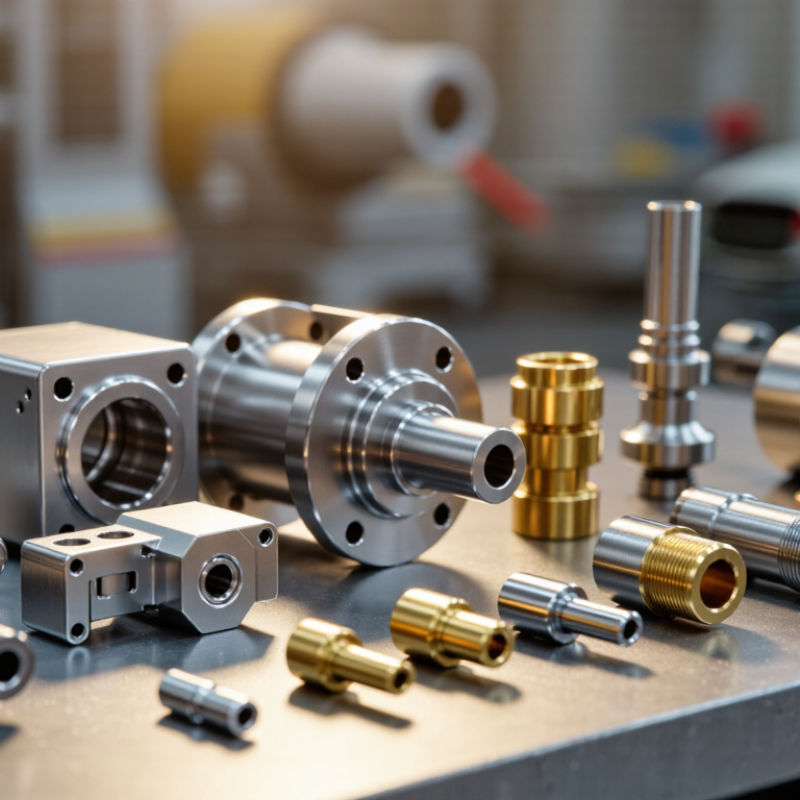
Before researching industries, define the component in measurable terms. “Precision metal part” could mean a turned pin, stamped bracket, or machined valve body. Record its function, material, production process, dimensions, tolerances, surface finish, and expected annual volume. For example, a stainless-steel spacer with a 12-millimeter bore needs a different process discussion from a thin stamped contact. Not just size. State what the part must withstand, such as vibration, heat, repeated loading, or corrosion. These details help distinguish likely users in sectors such as industrial machinery, transport, and medical equipment. Deloitte and the Manufacturing Institute’s 2024 workforce study estimates that U.S. manufacturing may need 3.8 million workers by 2033, with 1.9 million roles potentially unfilled. The constraint matters: buyers may value repeatable processes and clear inspection criteria, not tight tolerances alone. The U.S. Bureau of Labor Statistics projects about 34,200 annual openings for machinists and tool-and-die makers from 2023 to 2033, reinforcing the need to specify feasible processes.
Tips: Build a one-page part profile with a drawing, critical dimensions, material grade, finish, and inspection method. Mark which tolerances are essential and which are preferences. That distinction is easy to miss. Review it with a manufacturing engineer; an overly tight tolerance can add cost without improving the part’s function.
Start with its role, not the industry label. A turned shaft transfers motion, while a groove can retain a seal. Fit matters.
Check load, motion, temperature, fluid exposure, and cleaning frequency. Ask maintenance staff what fails, then inspect worn parts when possible. Wear tells a story.
A washdown machine may need corrosion-resistant parts. Agricultural equipment may need hardened pins and bushings to withstand impact, dust, and grit.
Tight tolerances matter at critical interfaces, such as a shaft’s bearing seat or a housing’s mounting face. Avoid tightening every dimension without a functional reason. Not everywhere.
Compare material, finish, tolerance, and production volume with the operating environment. Also consider vibration, temperature changes, and inspection methods.
Start with the finished item. A pump might contain a turned shaft, stamped retainers, and a machined housing.
Review manuals, repair diagrams, procurement documents, factory photos, and supplier information. Compare several sources; a catalog entry may be outdated.
Treating an entire industry as one environment can mislead you. A dry control cabinet differs from a washdown zone. Check assumptions.
Finding what industries use precision metal components starts with defining the parts you want to research, including their dimensions, materials, tolerances, and functions. A component’s role—such as joining, supporting, sealing, or transmitting motion—can point toward the kinds of equipment and industrial applications where it is needed. Comparing requirements across sectors can further narrow the search: different applications may call for particular material properties, dimensional accuracy, durability, or operating conditions.
To confirm industry use, follow the component through finished products and supply chains, and review relevant technical standards and application documents. Then check your findings against information from manufacturers, engineering resources, and other credible technical sources. Combining functional clues with material and tolerance requirements helps distinguish likely applications from unsupported assumptions and creates a clearer picture of where precision metal components are used.

 ElvisCast Precision