Precision metal components play a crucial role in various industries today. Industries relying on these specialized parts often seek expertise to improve their processes. Dr. Steven Carter, a leading figure in manufacturing technology, emphasizes, "Precision metal components are the backbone of modern production." This highlights their significance across a range of sectors.
One key area is the automotive industry. Manufacturers depend on precision components to enhance safety and performance. Components used in engines, brakes, and electrical systems must meet high standards. The aerospace industry also demands precision parts. Here, even the slightest deviation can affect safety and functionality.
Moreover, the medical field is another prominent user. Surgical instruments and devices require precision for patient safety. Companies continually explore "what industries use precision metal components." The answer often leads to traditional sectors and emerging technology areas. However, with innovation comes the challenge of maintaining quality and consistency. It's essential to reflect on how industries can adapt to evolving demands while ensuring reliability.
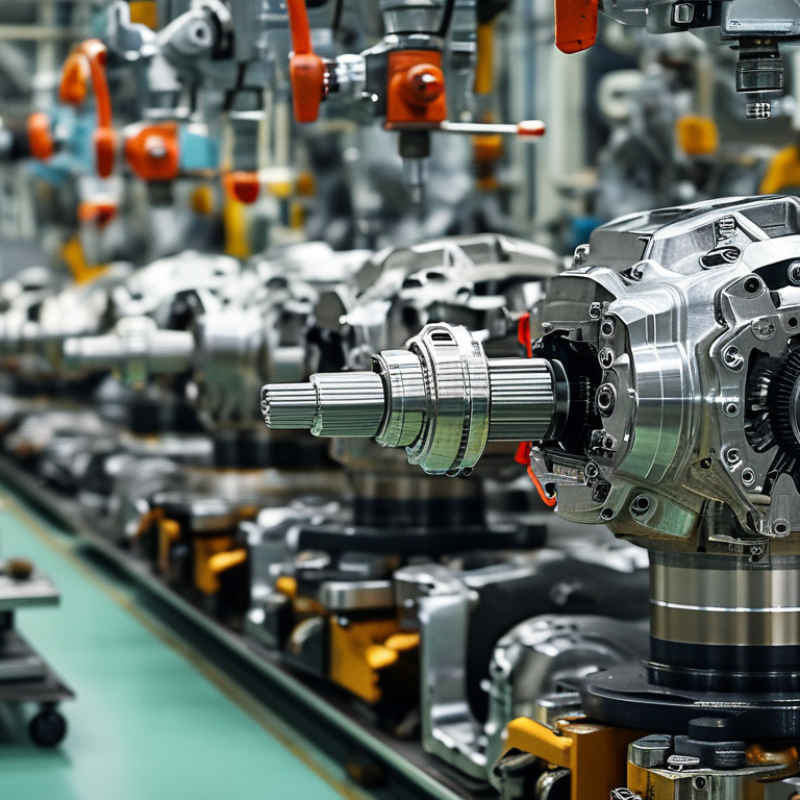
Precision metal components play a crucial role across multiple industries, significantly enhancing manufacturing efficiency. The automotive sector, for instance, relies heavily on these components for safety-critical parts. According to recent industry reports, over 30% of manufacturing costs in automotive production can be attributed to precision metal fabrication. As vehicles become more complex, the demand for precise metal components only increases.
The aerospace industry also stands out, utilizing precision metal parts for aircraft construction. Reports suggest that precision components can improve performance and reduce weight, leading to better fuel efficiency. In fact, leading manufacturers highlight that over 25% of their production utilizes advanced coated metals for optimal durability. These materials face challenges in consistency and quality control, indicating a need for continuous improvement in production processes.
Medical devices are another significant area benefiting from precision metal components. Components such as surgical instruments require the highest accuracy to ensure safety. Market analysis indicates that about 18% of precision machining goes into medical applications. This sector often grapples with stringent regulations. Variability in component quality can lead to potential compliance issues, emphasizing the importance of stringent quality management systems.
| Industry | Applications | Materials Used | Benefits of Precision Components |
|---|---|---|---|
| Automotive | Engine parts, transmission components | Aluminum, steel, titanium | Enhanced performance, durability |
| Aerospace | Aircraft structural components, engine mounts | Aluminum alloys, composites | Weight reduction, safety, long lifespan |
| Electronics | Circuit boards, enclosures | Copper, aluminum, stainless steel | Improved conductivity, compact designs |
| Medical Devices | Surgical instruments, implants | Titanium, stainless steel | Biocompatibility, precision |
| Construction | Structural beams, connectors | Steel, aluminum | Strength, reliability |
: Automotive, aerospace, and medical device industries rely heavily on precision metal components for manufacturing.
They enhance safety and account for over 30% of manufacturing costs in vehicle production.
They improve performance and reduce weight, leading to better fuel efficiency for aircraft.
Consistency and quality control issues require continuous improvement in production processes.
Surgical instruments require extreme accuracy; even small errors can have serious consequences.
CNC machining and laser cutting are frequently employed to meet regulatory standards.
Quality control is vital, as some defects may not be caught despite rigorous inspections.
Variances in material properties can lead to inconsistencies in the finished components.
They implement stringent quality management systems to handle regulatory challenges.
They need to remain vigilant and adapt their methods to overcome ongoing challenges.
Precision metal components play a crucial role in various industries, demonstrating their importance in modern manufacturing processes. The aerospace industry relies on these components for their stringent requirements for safety and performance, often utilizing them in aircraft structures and engine parts. Meanwhile, the automotive sector employs precision metal parts for critical applications such as engine components, transmission systems, and safety features, which enhance vehicle reliability and efficiency.
Additionally, the electronics sector has a high demand for precision metal components, as they ensure the functionality and durability of various electronic devices. In the medical device industry, precision metal fabrication techniques are essential for creating reliable and sophisticated instruments that adhere to strict regulatory standards. Overall, understanding what industries use precision metal components highlights their integral role in advancing technology and manufacturing efficiency across multiple sectors.

 ElvisCast Precision